
Planning a Disney vacation can sometimes feel like learning another language.
Someone tells you to rope drop EPCOT, make your ADRs at 60+10, buy LLMP, check the blockout dates on your AFS ticket, and maybe take the Monorail from the TTC.
If you’re new to Disney planning, you might reasonably wonder what any of that means.
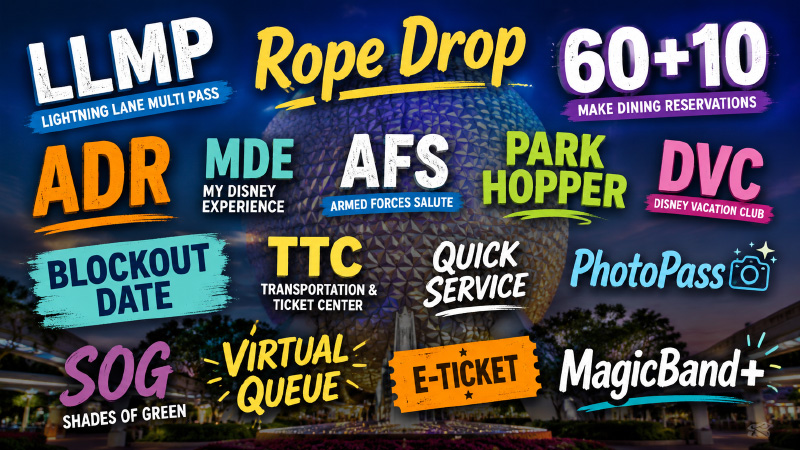
Some of the confusion comes from Disney itself. Disney has branded names for things that other vacation destinations would describe much more simply. Some terms come from decades of Disney history. Others were invented by Disney fans as shorthand. And just when everyone learns the terminology, Disney occasionally changes it.
Military families get another layer of terminology on top of that: AFS, SOG, ITT, ticket activation, and terms we use here at Military Disney Tips, such as Regular Military Discount Tickets.
You don’t need to memorize all of this.
This guide explains the Disney terms, phrases, and acronyms you’re actually likely to encounter while planning your vacation. Where there’s an interesting reason behind a strange term, I’ll explain that too. More importantly, I’ll point out the distinctions that can actually affect your plans.
Why Does Disney Have Its Own Language?
Some Disney terminology makes more sense once you understand that Disney has traditionally treated operating its theme parks like putting on a show.

Cast Member or CM
A Cast Member is a Disney employee. You’ll also frequently see it abbreviated as CM in Disney discussions.
The terminology comes from Disney’s theatrical approach to operating the parks. The people working there aren’t merely employees; they’re members of the cast putting on the show for Disney’s visitors.
That’s also why several other Disney terms sound as though they came from a theater.
Guest
Disney calls its visitors Guests. You’ll hear Cast Members use the term throughout Walt Disney World and Disneyland, and you’ll see it constantly in Disney’s written policies and information.
In ordinary language, you’re a customer. In Disney language, you’re a Guest attending the show.
Onstage and Backstage
Onstage is the part of Disney where the show is taking place, and Guests can see it. Backstage refers to Cast Member work areas that aren’t part of the Guest experience.
You’ll occasionally hear Disney fans say they saw something “backstage” or that a road, building, or attraction passes through a backstage area.
The terms make much more sense when you put them together:
- Disney employees are Cast Members
- Visitors are Guests
- Public areas are onstage
- Employee and support areas are backstage
- What many employees would call a uniform, Disney traditionally calls a costume
Disney isn’t just substituting cute words for ordinary business terminology. They’re all pieces of the same show philosophy.
Disney Bubble
The Disney bubble is fan terminology rather than an official Disney product or benefit.
When someone talks about staying “inside the Disney bubble,” they usually mean spending the vacation largely within Walt Disney World: staying at a Disney Resort hotel, using Disney transportation, eating at Disney restaurants, and generally not leaving Disney property.
For some families, remaining in that bubble is part of the appeal. Others would rather save money by staying or eating off property. Neither approach is inherently better; the phrase simply describes that immersive, mostly-Disney vacation experience.
Disney Park-Going Terms That Sound Strange at First
Rope Drop
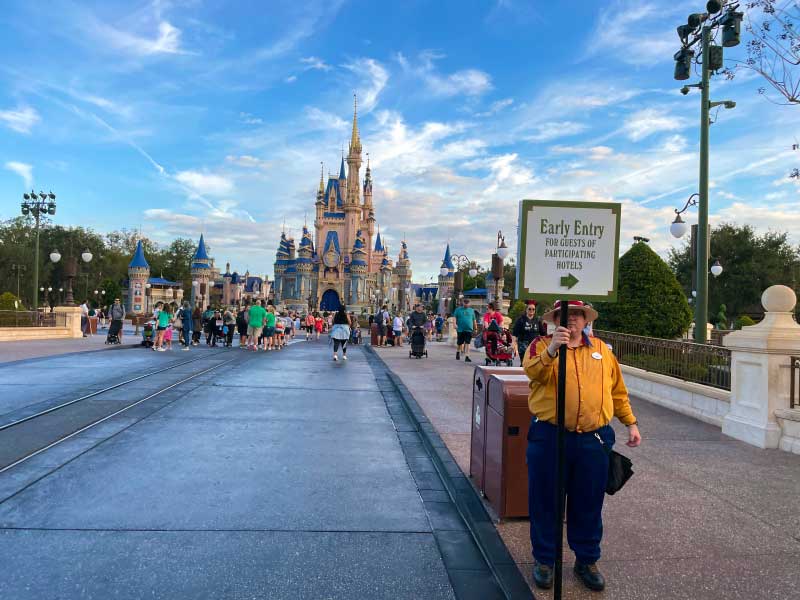
Rope drop means being at a theme park before it opens so you’re ready to start touring as soon as Disney begins allowing Guests into the attractions.
This one really did involve ropes.
Disney historically allowed Guests into portions of a park before the attractions officially opened, while Cast Members used ropes to hold the crowd at designated locations. At opening time, Cast Members would release or move the rope and Guests could proceed farther into the park.
The terminology stuck. Disney fans still talk about “rope drop” even when there isn’t a literal rope involved.
You may also hear it used as a verb:
“We’re going to rope drop Magic Kingdom tomorrow.”
That doesn’t just mean arriving at the park’s published opening time. The strategy normally means arriving early enough to be through transportation and security and positioned to take advantage of the beginning of the operating day.
At Walt Disney World, you’ll also need to understand Early Theme Park Entry, because eligible hotel Guests can currently enter the four theme parks 30 minutes before regular opening and access select attractions, shops, and dining. That means “rope drop” can describe somewhat different starting points depending on where you’re staying and what benefits you qualify for.
See: Green Light, GO! The Complete Guide to Disney World Rope Drop
Early Theme Park Entry
Early Theme Park Entry is the current Walt Disney World benefit that allows Guests staying at Disney Resort hotels and certain other eligible hotels to enter any of the four theme parks 30 minutes before the regular opening time.
This is an official Disney benefit, not merely another name for rope drop.
You can rope drop without qualifying for Early Theme Park Entry. But because other Guests are already eligible to enter and ride select attractions before you are, that changes what an effective rope-drop strategy looks like.
Extended Evening Theme Park Hours
Extended Evening Theme Park Hours are additional operating hours after regular park closing on select nights at select Walt Disney World theme parks.
They’re currently available to registered Guests staying at Disney Deluxe Resorts, Disney Deluxe Villa Resorts, Shades of Green, and certain other eligible hotels.
Don’t confuse Extended Evening Theme Park Hours with Early Theme Park Entry. The eligibility rules aren’t the same.
See: Early Entry and Extended Evening Theme Park Hours
Resort Hopping
Resort hopping means visiting one or more Disney Resort hotels where you aren’t staying, usually to eat, shop, look around, enjoy the atmosphere, or see seasonal decorations.
It’s fan shorthand rather than the name of a Disney benefit.
Resort hopping also doesn’t mean you’re treated as a registered Guest of that resort. Pool access, parking, transportation, and other privileges can have their own rules.
See: The Military Family’s Guide to Resort Hopping from Shades of Green
Split Stay
A split stay is one vacation divided between two or more hotels.
For example, you might spend three nights at Disney’s Pop Century Resort and then move to Disney’s Beach Club Resort for the final four nights of your trip.
Disney fans often use split stays to experience more than one resort, stretch a hotel budget, combine a military room discount with another reservation, or use different Disney Vacation Club reservations during the same trip.
See: Split Stays at Walt Disney World Resorts and Shades of Green
Tickets, Passes, and Getting Into the Parks
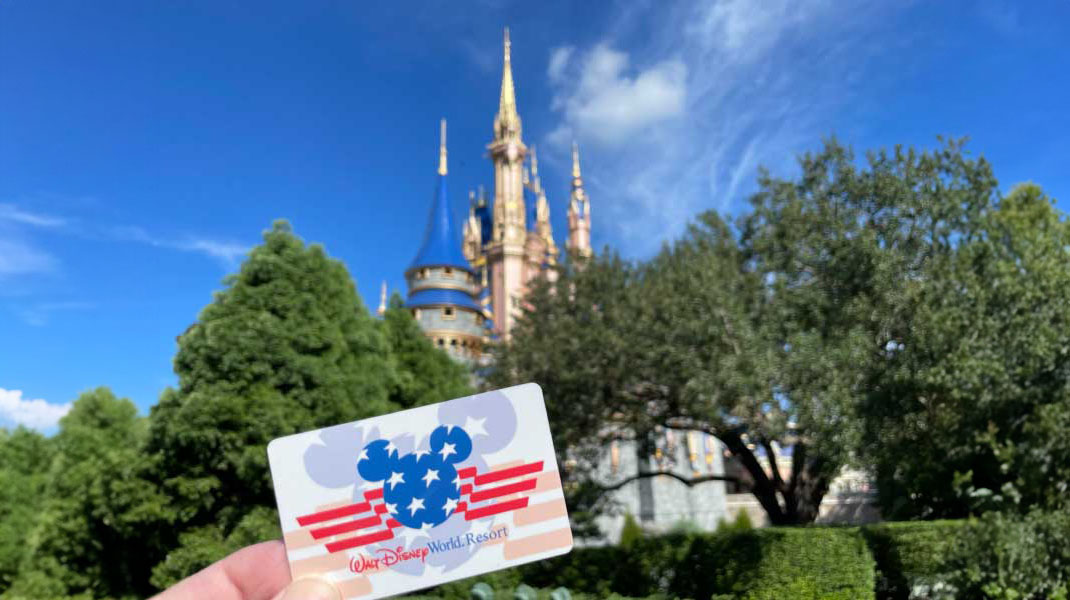
Some of Disney’s most confusing terminology involves tickets because several different restrictions can apply to the same ticket. A ticket can be valid, unexpired, activated, and still subject to a blockout or theme park reservation requirement.
Those words don’t mean the same thing.
Date-Based Ticket
A date-based ticket is tied to a selected starting date and a specific window during which its theme park days can be used.
That matters because having unused days doesn’t necessarily mean you can save them indefinitely for another trip.
This is particularly important for military families because current Walt Disney World Regular Military Discount Tickets are date-based, while Disneyland’s regular military-discounted tickets operate differently.
Start Date, Valid-Use Window, and Expiration
These terms are related but shouldn’t be collapsed into “when my ticket is good.”
Your start date is the date on which the ticket’s valid-use window begins.
The valid-use window is the period during which the ticket’s included park days can be used.
Expiration is when the ticket or its remaining admission is no longer valid under its terms.
Always look at the rules for the particular ticket you are considering. Disney sells different ticket products with different validity rules.
Activation
Activation means verifying and activating a ticket that requires an eligibility check before it can be used for theme park admission.
This term is especially important with military tickets.
Buying a ticket, linking it to your Disney account, activating it, and actually using an admission day can be separate events.
That’s why you’ll frequently see Military Disney Tips discuss where a military ticket can be activated, who must be present, and whether activation can be handled before the family’s first park morning.
See: How to Activate Your Disney Armed Forces Salute Tickets
Theme Park Reservation
A Theme Park Reservation reserves access to a particular theme park on a particular day when the admission type you’re using requires one.
The important thing to remember is:
A theme park ticket and a theme park reservation are not the same thing.
Disney’s reservation requirements have changed over the years and currently depend on the type of admission being used. Never assume that because someone says “Disney doesn’t require park reservations anymore,” that statement applies to every ticket or Annual Pass.
See: Using the Walt Disney World Theme Park Reservation System
Blockout Date
A blockout date (not blackout) is a date on which a particular ticket, Annual Pass, promotion, or other entitlement cannot be used.
The name is refreshingly literal: that date is blocked from use on the date in question.
A blockout is not the same thing as a theme park reservation problem.
Having a ticket that isn’t blocked out on a particular day doesn’t necessarily mean a theme park reservation will be available on that day.
Military families should pay particular attention to this distinction because Disney Armed Forces Salute tickets can have specific blockout periods.
See: Disney Armed Forces Salute Blockout Dates
Annual Pass, AP, and Passholder
An Annual Pass, usually shortened by Disney fans to AP, is Disney’s longer-term theme park admission product.
Someone who has one is an Annual Passholder or simply a Passholder.
Different Annual Pass types can have different blockout calendars and rules, so “I have an AP” doesn’t necessarily tell you everything about when that person can enter a park.
Park Hopper
The Park Hopper Option allows eligible ticket holders to visit more than one Disney theme park on the same day.
Again, the terminology is wonderfully literal: you’re allowed to “hop” from one park to another.
You’ll also hear Disney fans use it as a verb:
“We’re going to park hop from EPCOT to Hollywood Studios after lunch.”
Park Hopper Plus
Park Hopper Plus combines the ability to visit multiple theme parks on the same day with a number of additional visits to eligible Walt Disney World activities such as water parks and mini golf, and certain other sports or recreation experiences.
The additional visits are a separate part of the ticket. They aren’t simply extra theme park days.
Water Park and Sports Option
The Water Park and Sports Option also provides a number of visits to eligible Walt Disney World water parks and other recreation activities, but without adding the same-day theme park hopping benefit.
The word Sports can be misleading if you assume this is simply admission to ESPN Wide World of Sports. Disney uses it as part of the umbrella name for an option that can include several eligible non-theme-park activities.
The easiest distinction is:
- Park Hopper: Visit more than one theme park per day
- Water Park and Sports: One theme park per day plus additional eligible water park/recreation visits
- Park Hopper Plus: Park hopping plus those additional eligible visits
See: Disney World Water Parks and Sports Option & Park Hopper Plus Option
Lightning Lanes, Ride Lines, and Getting on Attractions
If Disney’s current Lightning Lane terminology makes your eyes glaze over, start with one important distinction:
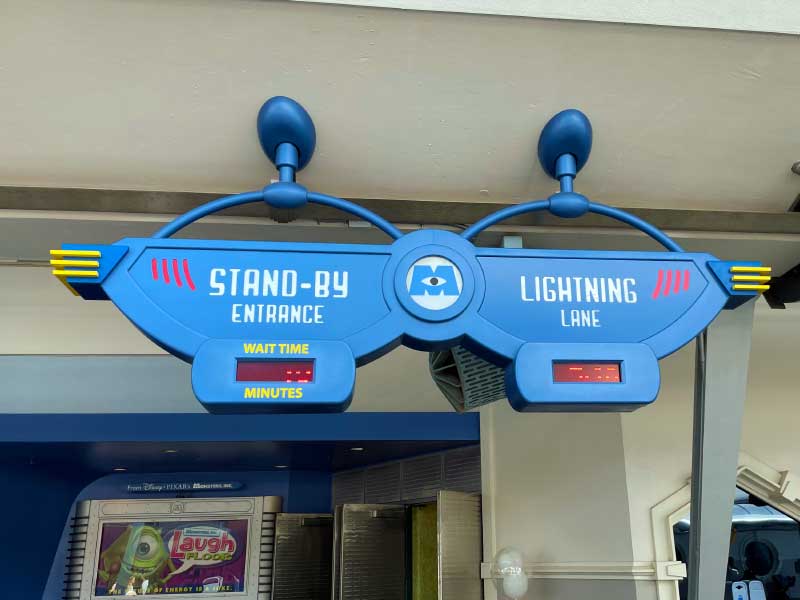
A Lightning Lane is an entrance. A Lightning Lane pass is something that gives you access to that entrance.
Disney currently sells three different Lightning Lane pass products at Walt Disney World. They aren’t three names for the same thing.
Standby Queue or Standby Line
The standby queue is what most people would simply call the regular line.
If an attraction has a posted standby wait of 45 minutes, you can enter that queue and wait your turn (for roughly 45 minutes).
Disney uses “standby” because you’re waiting in the regular queue rather than entering through another access method.
Lightning Lane
A Lightning Lane is an alternate attraction entrance designed to provide a shorter wait than the standby queue.
Buying Lightning Lane Multi Pass doesn’t mean you’re buying a completely separate kind of ride ticket. You’re buying the ability to access Lightning Lane entrances under that product’s rules.
Lightning Lane Multi Pass or LLMP
Lightning Lane Multi Pass, often shortened by Disney planners to LLMP, allows you to make Lightning Lane selections for multiple included attractions.
At Walt Disney World, eligible Guests can make initial selections before their park day. After you begin redeeming selections, additional selections can be made subject to availability and the current rules.
The important word in the name is Multi: this is the Lightning Lane product intended for multiple participating attractions.
Lightning Lane Single Pass or LLSP
Lightning Lane Single Pass, or LLSP, is purchased for an individual eligible attraction.
You don’t have to buy Multi Pass to buy a Single Pass, or the reverse.
The important distinction is that Single Pass attractions are typically the most popular (or newest) attractions at each theme park. Single Pass attractions are not part of the Multi Pass system.
See: Disney Lightning Lane Multi Pass and Lightning Lane Single Pass
Lightning Lane Premier Pass or LLPP
Lightning Lane Premier Pass, often abbreviated LLPP, is Disney’s premium Lightning Lane option.
At Walt Disney World, it provides one-time access to the available Lightning Lane experiences in one theme park without requiring you to schedule individual arrival windows for those attractions.
Premier Pass therefore isn’t just “Multi Pass with more rides.” The way you use it is fundamentally different.
See: Disney Lightning Lane Premier Pass
Arrival Window or Return Window
An arrival window is the period during which you’re supposed to arrive at an attraction to redeem a scheduled Lightning Lane selection.
Disney fans also commonly call this a return window because it’s the time you’re supposed to return to the attraction.
Tier or Tiered Selections
When Disney divides Lightning Lane attractions into groups for advance selection, planners often call those groups tiers.
The purpose is to limit how many of the most in-demand attractions can be selected during the initial booking process rather than allowing one Guest to reserve all of them at once.
Redeem or Redemption
To redeem a Lightning Lane selection means to actually use it by entering the attraction’s Lightning Lane during the appropriate time.
You’ll see this word in planning advice because redeeming a selection can affect when you’re eligible to make another selection under the current Multi Pass rules.
Virtual Queue
A Virtual Queue is a system that lets Disney manage access to an attraction without having everyone physically stand in a traditional line for the entire wait.
A Virtual Queue is not another name for a Lightning Lane.
Disney has often used Virtual Queues for new attractions experiencing extremely high demand, then discontinued the Virtual Queue as operations and demand changed.
Because of this, the attractions using Virtual Queues can change, so this is a term where understanding the concept is more useful than memorizing today’s attraction list.
Boarding Group
A Boarding Group is a numbered group assigned through Disney’s Virtual Queue system.
When your group is called, you become eligible to return and enter the attraction according to that system’s rules.
Being assigned a Boarding Group therefore doesn’t necessarily mean you can immediately walk to the attraction and ride.
Single Rider
A Single Rider line allows Disney to use individual Guests to fill otherwise empty seats on participating attractions. For instance, if an attraction seats three across and a party of two is assigned that row, a single rider can take the open seat.
The potential benefit is a shorter wait. The tradeoff is that your party may be separated, because the line exists to fill individual empty seats—not to keep groups together.
You don’t have to be visiting Disney alone to use Single Rider, and there is no fee or ticket required.
Rider Switch
Rider Switch helps parties when someone in the group can’t or doesn’t want to experience a participating attraction and another person needs to remain with them. For example, children who are too short to ride an attraction.
It allows eligible members of the party to take turns experiencing the attraction without requiring everyone to repeat the entire waiting process.
Rider Switch isn’t child care, and it doesn’t mean the whole family gets to skip the attraction’s normal access rules.
Planning a Disney Vacation?
Military Disney discounts can save families a significant amount of money, but figuring out eligibility, tickets, resorts, transportation, and Lightning Lane strategies can get confusing quickly. These guides are a great place to start.
- Back to Basics Posts – Start here for beginner-friendly Disney planning topics.
- Disney Veteran & Military Discount Eligibility Guide
- Disney Military Tickets – Your Start-to-Finish Guide
- Disney Armed Forces Salute Guide
- Walt Disney World Vacation Planning Guide
- Disney Packing Checklist
More Planning Resources:
Dining Reservations and Disney Restaurant Language
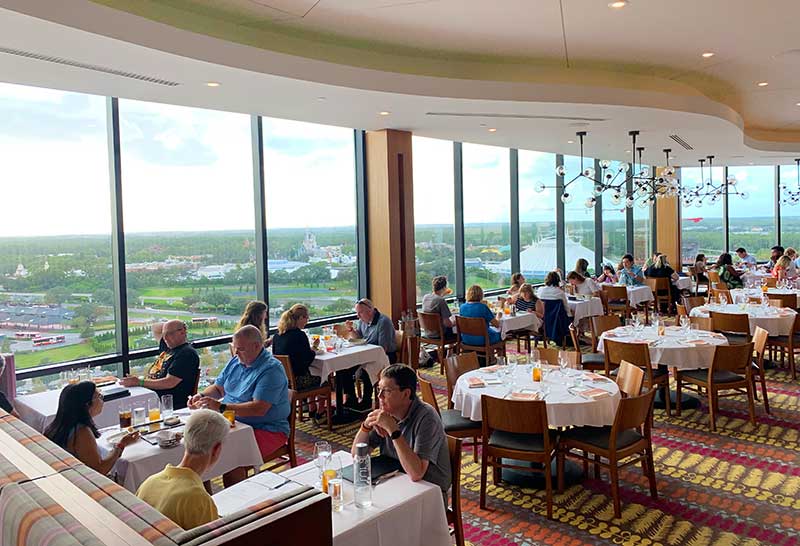
Advance Dining Reservation or ADR
ADR stands for Advance Dining Reservation.
Disney planners have used the acronym for many years, even though Disney increasingly just talks about making dining reservations.
Don’t let “Advance Dining Reservation” make this sound like some exotic Disney product. In practical terms, you’re reserving a restaurant in advance.
The reason the term became so prominent is that popular Disney restaurants can require substantial advance planning, so making your ADRs became one of the standard milestones of planning a Walt Disney World vacation.
See: The Ultimate Guide to Advance Dining Reservations
60+10
60+10 is Disney-planning shorthand, not the name of a Disney product.
At Walt Disney World, dining reservations open 60 days in advance. Eligible Disney Resort hotel Guests can make reservations beginning 60 days before check-in for their stay, for up to the first 10 days of their trip.
That’s where planners get the shorthand 60+10.
It doesn’t mean dining reservations open 70 days before every meal. It describes the advantage of being able to book later days of an eligible resort stay when your arrival-date booking window opens.
Quick Service or QS
Quick Service, commonly abbreviated QS, is Disney’s broad category for restaurants where the normal experience doesn’t involve traditional table service with a server taking your order.
Think of it as Disney’s version of counter-service or fast-casual dining rather than assuming “quick” means you’ll always get your food quickly.
Table Service or TS
Table Service, or TS, describes Disney restaurants where you’re seated and receive traditional restaurant service at the table.
Disney Dining Plan discussions frequently use QS and TS because the type of restaurant affects which dining-plan benefits apply.
Character Dining
Character Dining combines a meal with appearances by Disney characters.
You’re paying for more than the food. The character experience is a major part of the product, which is one reason these meals can cost considerably more than an otherwise comparable meal.
Signature Dining
Signature Dining is terminology Disney uses for a group of its more upscale dining experiences.
Don’t assume the word simply means “popular Disney restaurant.” It denotes a particular level/category of dining experience.
See The Various Types of Disney Food Service
Mobile Order
Mobile Order lets you order and pay for food through Disney’s app at participating locations rather than beginning the process at a traditional ordering counter.
When someone tells you to “mobile order lunch,” they’re talking about using that system, not merely looking at a menu on their phone.
See: Beat the Lines – Mobile Order at Walt Disney World Counter Service Restaurants
Walk-Up List
The Walk-Up List is a same-day system at participating restaurants that may allow you to join a list for a table when you don’t have an advance dining reservation.
Joining a Walk-Up List isn’t the same as having a guaranteed ADR. Availability depends on the restaurant’s current capacity and demand.
Prix Fixe
Prix fixe isn’t Disney terminology, although you’ll encounter it frequently at Disney restaurants. It means a meal offered at a set price with a predetermined structure or selection of courses.
Family-Style, Buffet, and All-You-Care-to-Enjoy
These terms can all describe meals where quantity isn’t limited to a single conventional entrée, but the service isn’t necessarily the same.
At a buffet, you get up and select your own food.
With family-style dining, shared dishes are brought to the table for the party.
All-you-care-to-enjoy is Disney’s more genteel way of saying that you can have more of the included food if you want it. It doesn’t necessarily tell you whether the meal is buffet or family-style.
Disney Dining Plan or DDP
DDP stands for Disney Dining Plan.
Disney Dining Plans allow eligible Guests to prepay for a package of dining benefits associated with their Walt Disney World vacation rather than paying the menu price for every included meal and snack as they go.
The specific plans, prices, and included benefits can change. For terminology purposes, the important thing is that a Dining Plan is a method of paying for and allocating eligible dining—not a restaurant reservation program.
Having the Disney Dining Plan doesn’t get you a table at a restaurant. You still need to make dining reservations where they’re appropriate.
See Why I Don’t Recommend the Disney Dining Plan
Dining Credits, Meal Credits, and Snack Credits
Disney Dining Plan benefits are commonly described in terms of credits: essentially units of the plan that can be redeemed for eligible meals, snacks, or other included items.
The exact terminology and what each plan provides can change, so always check the current plan rather than relying on an old article that says a particular restaurant “costs one credit” or “costs two credits.”
Refillable Mug
A refillable mug is a Disney Resort beverage mug that can be used for eligible refills at participating resort beverage stations during its applicable period.
The important word is resort. It isn’t a refillable soft-drink mug for use throughout the theme parks.
Disney Resort and Hotel Language

Value, Moderate, and Deluxe Resorts
Value, Moderate, and Deluxe are Walt Disney World’s major Disney Resort hotel categories.
They’re Disney classifications, not independent hotel-star ratings.
A Moderate Resort isn’t called “Moderate” because someone reviewed it and decided the quality was mediocre. The categories broadly reflect Disney’s resort positioning, amenities, room types, transportation, dining, theming, and pricing.
See: Walt Disney World Resorts and Disneyland Resort Hotels
Deluxe Villa Resort
A Disney Deluxe Villa Resort is a Disney Vacation Club-style resort or accommodation category offering villa-type lodging while also being part of Disney’s Deluxe-level resort ecosystem.
You don’t necessarily have to be a Disney Vacation Club Member to stay in a Deluxe Villa accommodation; some inventory can be booked with cash through Disney.
Disney Vacation Club or DVC
DVC stands for Disney Vacation Club, Disney’s vacation ownership program.
Members purchase a real-estate interest represented through an annual allocation of points, then use those points to book eligible Disney Vacation Club accommodations.
If someone says, “We’re staying at BoardWalk on DVC points,” they’re distinguishing that reservation from an ordinary cash hotel booking.
Home Resort
A DVC Member’s Home Resort is the Disney Vacation Club resort associated with the ownership interest they purchased.
The term matters because Home Resort ownership can affect how early a Member can book that resort compared with other DVC resorts.
Points and Cash Stay
Points are the DVC currency Members use to book eligible accommodations.
A cash stay simply means the room was booked by paying money rather than using DVC points. Disney fans use the distinction because the same resort—or even the same general type of accommodation—may be available through different booking channels.
Renting DVC Points
Renting DVC points is Disney-fan shorthand for paying to stay in a Disney Vacation Club accommodation using points owned by someone else.
You’re not usually renting a pile of points and putting them into your own account. Instead, a DVC Member uses their points to make a reservation for you, either directly or through a DVC point-rental company.
This can sometimes provide access to DVC villas for less than booking the same accommodation directly from Disney for cash, but it also works differently from a normal Disney hotel reservation. Payment, cancellation, changes, and who controls the reservation can depend on how and from whom you rent.
So when a Disney fan says, “We rented points for our stay at Beach Club Villas,” they mean they paid to use someone else’s DVC ownership to secure the reservation—not that they became a temporary DVC Member.
See: Try Disney Vacation Club Without Buying In: Why We Recommend the DVC Rental Store
Room-Only Reservation and Vacation Package
A room-only reservation is essentially what it sounds like: you’re booking the hotel room rather than purchasing a Disney vacation package that bundles the room with other vacation components.
A vacation package combines the resort stay with other components under Disney’s package terms, commonly theme park tickets or the Disney Dining Plan.
The distinction can affect payment rules, cancellation terms, and other planning details, so these aren’t merely two ways of describing the same reservation.
See: Disney Room Only Reservation Versus a Package: What’s the Difference?
Preferred Room
A Preferred Room refers to a Disney room category with a location Disney considers more convenient or desirable, such as proximity to major resort amenities.
It doesn’t automatically mean the physical room itself is larger, newer, or more luxurious.
Club Level
Club Level is a premium Disney Resort accommodation category that includes access to additional services and amenities, including a Club Level lounge.
It’s an accommodation/service level, not necessarily a room with a particularly good view.
Need Help Planning Your Disney Vacation?
Disney military discounts can save families a lot of money, but figuring out tickets, eligibility, resorts, Lightning Lane strategies, and transportation can quickly become overwhelming.
That’s why Military Disney Tips recommends The Mouse Experts Military Disney Vacation Specialists.
The Mouse Experts is a military-family owned and operated Disney-specializing travel agency that has partnered with Military Disney Tips for over 17 years. Their agents personally use the same military discounts that you do and understand the unique challenges military families face when planning Disney vacations.
- Experienced with Disney military discounts and eligibility rules
- Military-family owned and operated
- Same Disney pricing as booking directly with Disney
- Additional planning assistance available for guests wanting more personalized help
- Can help reduce stress, save time, and avoid common planning mistakes
Over 27,000 Military Disney Tips readers have contacted The Mouse Experts over the years for help planning their Disney vacations.
Disney Transportation Terms
Transportation and Ticket Center or TTC
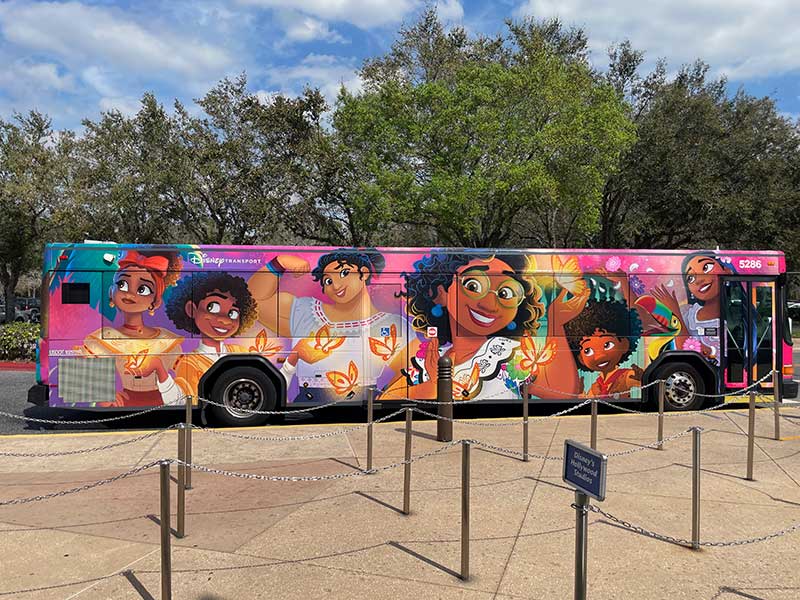
TTC stands for Transportation and Ticket Center.
Despite the name, most modern Walt Disney World Guests encounter the TTC primarily as a transportation hub rather than as a place they need to visit to buy tickets.
It’s especially important for Magic Kingdom transportation. Guests arriving in the Magic Kingdom area by car and ordinary Uber or Lyft use the TTC and then continue to the park by Monorail or ferry.
Shades of Green Guests also encounter the TTC frequently because it plays a major role in Shades transportation to Magic Kingdom and EPCOT.
See: Walt Disney World’s Transportation and Ticket Center
Monorail
The Walt Disney World Monorail System has multiple routes, which is why “take the Monorail” sometimes isn’t enough information.
The Express Monorail connects the TTC and Magic Kingdom.
The Resort Monorail travels around the Magic Kingdom resort loop, serving the TTC, Magic Kingdom, and the Monorail resorts.
A separate EPCOT Monorail connects the TTC and EPCOT.
See: Soaring Above the Magic: The Enchanting World of Disney’s Monorails
Disney Skyliner
The Disney Skyliner is Walt Disney World’s aerial gondola transportation system connecting EPCOT and Disney’s Hollywood Studios with several Disney Resort hotels.
When Disney planners say a hotel is a “Skyliner resort,” they generally mean it has convenient access to this transportation network.
See: Walt Disney World’s Skyliner System
International Gateway
International Gateway is EPCOT’s secondary park entrance between the United Kingdom and France areas of World Showcase.
This term matters because Guests visiting EPCOT using the Skyliner or staying in the EPCOT Resort Area will enter or leave through International Gateway rather than EPCOT’s main entrance.
See: EPCOT’s International Gateway
It has nothing to do with Orlando International Airport.
MCO
MCO is the airport code for Orlando International Airport.
This one has a particularly interesting origin for military families. The code comes from McCoy Air Force Base, which formerly occupied the site before the civilian airport developed into today’s Orlando International Airport.
That’s why Orlando’s airport code is MCO rather than something that looks more like “Orlando.”
A bit of aviation trivia from Steve: Orlando International’s ICAO airport code is KMCO, while its IATA code is MCO. Airports in the contiguous United States generally add a K to the three-letter location identifier for their ICAO code, which is why MCO becomes KMCO.
Minnie Van
A Minnie Van is Disney’s paid private transportation service within Walt Disney World, using Disney-owned vehicles driven by Disney Cast Members and requested through the Lyft app for regular on-property service.
Despite the name, it isn’t a generic minivan service. “Minnie” refers, of course, to Minnie Mouse—the vehicles’ famous red-and-white polka-dot design makes the connection pretty obvious.
See: When Is a Minnie Van Actually Worth the Money at Disney World?
Apps, MagicBands, and Disney Photo Terms
My Disney Experience or MDE
My Disney Experience, usually abbreviated MDE, is the Walt Disney World digital planning ecosystem that connects your account with trip information such as resort reservations, theme park admission, dining plans, Lightning Lane selections, and other vacation details.
You’ll also hear people use MDE (and even sometimes MDX) when referring to the My Disney Experience mobile app.
MyDisney Account
Your MyDisney account is the broader Disney account identity you use to sign in to participating Disney services.
My Disney Experience and your MyDisney account therefore aren’t quite synonyms. Your account is your identity/login; My Disney Experience is the Walt Disney World planning environment using that account, just as the Disneyland app is the Disneyland planning environment using that account.
MagicBand and MagicBand+
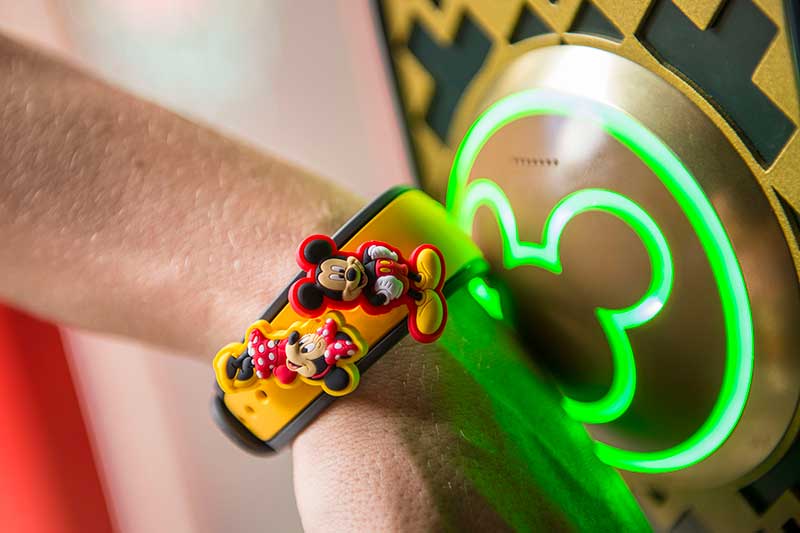
A MagicBand is a wearable device that can interact with Disney systems associated with your account.
MagicBand+ is the current interactive generation of that device, adding features such as lights, haptics, and interaction with certain Disney experiences.
One distinction is particularly important:
Your MagicBand is not your theme park ticket.
Your admission is linked to your account. The MagicBand is one way Disney can identify you and access linked entitlements such as your admission ticket.
Disney MagicMobile
Disney MagicMobile allows eligible Walt Disney World Guests to create a digital pass on a compatible phone or smartwatch and use it for functions such as accessing linked theme park admission.
Like a MagicBand, MagicMobile is giving you a way to access admission and other eligible features already associated with your Disney account.
Friends & Family
Friends & Family is My Disney Experience terminology for connecting the people (with other MyDisney accounts) whose plans you may need to see or manage together.
This becomes particularly important when one person is coordinating dining, Lightning Lanes, tickets, or other plans for a family or larger traveling party.
Linking
To link something in Disney planning means connecting a reservation, ticket, person, or other eligible item to the appropriate Disney account or planning party.
Buying something from Disney doesn’t always mean it will magically appear in every member of the group’s app exactly where you expect it. That’s why Disney planning instructions so frequently tell you to “link” tickets or reservations.
Disney PhotoPass
Disney PhotoPass is Disney’s photography system and service. It includes Disney PhotoPass photographers, eligible attraction photos, and the infrastructure that associates those images with your Disney account.
Memory Maker
Memory Maker is a Walt Disney World photo product that provides digital downloads of eligible Disney PhotoPass photos under its terms.
This is one of those distinctions that sounds fussy until you understand it:
PhotoPass is the photography service. Memory Maker is a product for obtaining the photos.
You can have a PhotoPass photographer take your picture without having already purchased Memory Maker.
Tap and Touchpoint
Disney frequently uses touchpoints—the Mickey-shaped readers where you tap a MagicBand, card, phone, or other eligible media.
That’s why Disney planning advice may tell you to “tap in” at a park at the “tapstiles” or “tap into” a Lightning Lane.
See: WDW Military Discount on Memory Maker
Military Disney Planning Terms
Military families get their own additional layer of Disney terminology, and this is an area where using the wrong term can create genuine planning problems.
Disney Armed Forces Salute or AFS
The Disney Armed Forces Salute, often shortened to AFS, is Disney’s special promotional program for eligible members of the U.S. military community.
It can include specially priced theme park tickets and Disney Resort room offers.
The important word is eligible. “Military” doesn’t automatically mean everyone who has ever served qualifies for every Armed Forces Salute benefit.
Military Promotional Ticket
Military Promotional Ticket is terminology Disney uses for the specially priced theme park tickets offered through the Armed Forces Salute.
You’ll also hear people casually call them “Salute tickets” or “military tickets.”
That last phrase is where confusion begins, because these aren’t the only discounted tickets military families may be able to purchase.
See: The Disney Armed Forces Salute
Regular Military Discount Tickets
Regular Military Discount Tickets is terminology we use here at Military Disney Tips.
It is not an official Disney product name.
We use the term to distinguish the ordinary discounted Disney tickets sold through military ticket offices from the much more specialized Disney Armed Forces Salute Military Promotional Tickets.
Calling both of them simply “military tickets” makes it unnecessarily difficult to explain eligibility, pricing, ticket limits, activation, expiration, and other rules because the two programs don’t work the same way.
See: Regular Disney Military Ticket Discount for Walt Disney World and Disneyland
Shades of Green or SOG
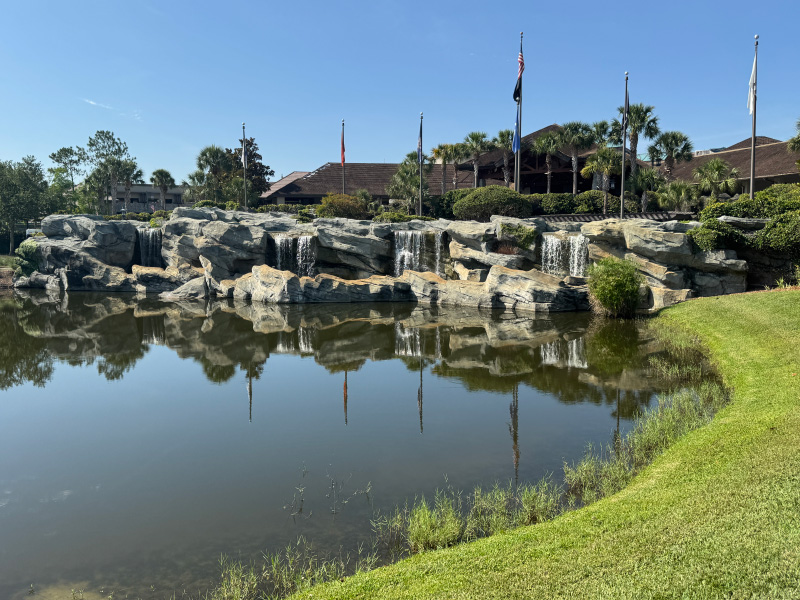
Shades of Green, frequently abbreviated SOG or SoG, is the Armed Forces Recreation Center located at Walt Disney World.
It isn’t a Disney Resort hotel, even though it’s physically located on Walt Disney World property. That distinction can matter for Disney benefits and transportation rules.
See: Shades of Green at Walt Disney World
ITT, ITR, and MWR
Military installations use several names and acronyms for the organizations that sell discounted leisure and attraction tickets.
ITT commonly means Information, Tickets and Travel.
ITR commonly means Information, Tickets and Registration.
MWR means Morale, Welfare and Recreation, the broader military recreation organization under which many of these services operate.
The exact office name varies by service and installation, which is why Military Disney Tips often uses ITT/ITR when discussing military ticket offices.
Eligible Service Member or Eligible Member
Disney’s military promotions define who qualifies to use the offer. An Eligible Service Member isn’t simply anyone who can produce some form of military or veteran identification.
The exact eligibility language matters because different Disney military offers and Shades of Green can have different eligibility rules.
Sponsor and Spouse
In military benefit discussions, the sponsor is the person whose military status establishes the family’s eligibility.
A spouse may be able to purchase, activate, or use certain benefits on the sponsor’s behalf, or on their own, but the rules aren’t identical for every Disney or military program.
That’s why Military Disney Tips distinguishes between what the eligible member can do and what a spouse can do rather than treating “military family” as one interchangeable eligibility category.
Salute Ticket Allotment or Six-Ticket Limit
The Salute ticket allotment refers to the limited number of Disney Armed Forces Salute promotional tickets an eligible member and spouse can activate during the applicable promotional year.
At Walt Disney World, the familiar shorthand is the six-ticket limit, although the exact practical number available for other Guests can depend on who is present and how the benefit is being used.
This limit applies to the special promotional tickets. Don’t assume it applies to every Regular Military Discount Ticket simply because both are sold through military channels.
Military Room Discount
A military room discount refers to Disney’s promotional room offer for eligible military families at participating Walt Disney World or Disneyland Resort hotels through the Disney Armed Forces Salute.
It isn’t the same thing as staying at Shades of Green, which has its own eligibility and rate structure.
Shades of Green Rate Category
Shades of Green room rates are organized into rate categories based on the eligible Guest’s military or qualifying status.
These aren’t Disney-style seasonal room categories. Shades rates are based on eligibility/pay-grade categories and operate under their own system.
See: Shades of Green’s Rates and Categories
Old Disney Terms You May Still Hear

Disney changes its systems often enough that learning the old terminology can actually help you identify outdated planning advice.
If a five-year-old article tells you to make a FastPass+ reservation, you don’t need to figure out where that button is hiding in My Disney Experience. The system doesn’t exist anymore.
E-Ticket Attraction
When a Disney fan calls a ride an E-Ticket attraction, they usually mean it’s a major, headlining attraction with a high level of ambition, excitement, or investment.
This expression comes directly from Disney history.
Disney’s parks once sold attraction ticket books, and Guests would present the appropriate ticket to experience individual attractions. The earliest books contained A, B, and C tickets for different attractions. Disney later added D tickets and, in 1959, E tickets for the park’s most exciting attractions.
The physical E ticket disappeared when Disney moved away from attraction ticket books in 1982, but the expression survived.
So when someone calls an attraction “an E-Ticket,” they aren’t telling you that you need to buy a special E ticket to ride it. They’re using a term whose origins go back more than six decades to say it’s one of the best!
FASTPASS and FastPass+
Disney FASTPASS was Disney’s earlier system for obtaining a return time for a popular attraction rather than spending the entire wait in the regular queue.
It began in 1999 and, in its familiar original form, involved obtaining a physical paper FASTPASS at the attraction with a return window to come back to the attraction (this is where Return Window comes from!).
Walt Disney World later moved to FastPass+, which brought attraction reservations into My Disney Experience, Disney’s online vacation-planning system.
Neither system is current.
But longtime Disney visitors still sometimes use “FastPass” generically when they mean whatever Disney’s current shorter-wait system happens to be. If someone tells you in 2026 to “get a FastPass for that ride,” they’re talking about a Lightning Lane—not a product you can actually buy called FastPass.
Disney Genie and Disney Genie+
Disney Genie and Disney Genie+ were not the same thing.
Disney Genie was introduced as a digital planning feature within Disney’s apps. Disney Genie+ was the paid service that replaced FastPass+ and provided access to Lightning Lane entrances at participating attractions.
At Walt Disney World, Disney Genie+ was replaced by Lightning Lane Multi Pass on July 24, 2024.
So if you’re reading older planning advice telling you to purchase Genie+, translate that terminology before applying the advice to a current trip.
Individual Lightning Lane or ILL
Individual Lightning Lane, commonly abbreviated ILL, was the name Disney planners used for the separately purchased Lightning Lane access offered for select high-demand attractions during the Genie+ era.
Disney replaced that terminology with Lightning Lane Single Pass in July 2024.
You’ll still see ILL constantly in older articles, videos, Facebook groups, and discussion boards.
Extra Magic Hours or EMH
Extra Magic Hours, commonly abbreviated EMH, was Disney’s former terminology for additional theme park operating time offered to eligible resort Guests.
Today, Walt Disney World uses Early Theme Park Entry and Extended Evening Theme Park Hours.
Don’t assume those current benefits are simply EMH with a new name. The eligibility, schedule, and way the benefits operate have changed.
Downtown Disney
At Walt Disney World, Downtown Disney is the former name of what is now Disney Springs. Walt Disney World officially changed the name in 2015 as part of the area’s major redevelopment.
There’s an important coast-to-coast wrinkle:
Downtown Disney is still a current name at Disneyland Resort. The shopping, dining, and entertainment district there is the Downtown Disney District.
So an old Walt Disney World article (or Steve, yes, I sometimes slip verbally) mentioning Downtown Disney is talking about today’s Disney Springs. A current Disneyland article mentioning Downtown Disney isn’t outdated.
See Walt Disney World’s Disney Springs and the Disneyland Resort’s Downtown Disney
Disney Planning Terms A–Z Quick Reference
You don’t need to memorize Disney’s vocabulary. Use this section when you run across an unfamiliar term, then jump back to the appropriate section above when you need the fuller explanation.
| Term | Meaning |
|---|---|
| ADR | Advance Dining Reservation |
| AFS | Disney Armed Forces Salute |
| AP | Annual Pass |
| Backstage | Disney areas not intended to be part of the Guest-facing “show” |
| Blockout Date | A date when a particular ticket, pass, or offer cannot be used |
| Boarding Group | A group assigned through certain Disney Virtual Queue systems |
| CM | Cast Member |
| DDP | Disney Dining Plan |
| Disney Bubble | Fan term for remaining largely within the Disney vacation environment |
| DLR | Disneyland Resort |
| DS | Disney Springs |
| DVC | Disney Vacation Club |
| E-Ticket | Fan term for a major Disney attraction, derived from old attraction ticket books |
| EMH | Extra Magic Hours, a former Disney benefit |
| FASTPASS / FastPass+ | Former Disney attraction reservation/return-time systems |
| Genie+ | Former paid Lightning Lane service, replaced at WDW by Lightning Lane Multi Pass |
| ILL | Individual Lightning Lane, former terminology replaced by Lightning Lane Single Pass |
| International Gateway | EPCOT’s entrance between the United Kingdom and France areas of World Showcase |
| ITT / ITR | Common names for military installation ticket and leisure offices |
| LLMP | Lightning Lane Multi Pass |
| LLPP | Lightning Lane Premier Pass |
| LLSP | Lightning Lane Single Pass |
| MCO | Orlando International Airport’s airport code, inherited from McCoy Air Force Base |
| MDE | My Disney Experience |
| Memory Maker | Walt Disney World product providing downloads of eligible PhotoPass photos |
| MWR | Morale, Welfare and Recreation |
| Onstage | Disney’s Guest-facing “show” areas |
| Park Hopper | Ticket option allowing visits to more than one theme park on the same day |
| PhotoPass | Disney’s photography service and system |
| QS | Quick Service dining |
| Regular Military Discount Tickets | MDT term for ordinary military-channel discounted Disney tickets, distinct from AFS promotional tickets |
| Renting DVC Points | Paying for a DVC reservation made using points owned by someone else |
| Rope Drop | Arriving before park opening to be positioned to begin touring as attractions open |
| SOG | Shades of Green |
| Split Stay | A vacation divided between two or more hotels |
| Standby | The regular attraction queue |
| TS | Table Service dining |
| TTC | Transportation and Ticket Center |
| Virtual Queue | A system for managing attraction access without spending the entire wait in a physical standby line |
| WDW | Walt Disney World |
Bottom Line
Disney planning really does have its own language, but most of it becomes much less intimidating once you know what the terms are actually describing.
Some names are literal. Blockout dates are dates blocked from use. Park Hopper lets you hop between parks. Others make more sense once you know the history: rope drop once involved an actual rope, an E-Ticket really was a ticket, and MCO comes from an Air Force base that no longer exists.
The most important thing isn’t memorizing the vocabulary. It’s recognizing when two similar-sounding terms actually mean different things.
A ticket isn’t a theme park reservation. A blockout isn’t an expiration date. PhotoPass isn’t Memory Maker. A Lightning Lane isn’t the same thing as a Lightning Lane pass. And a Disney Armed Forces Salute ticket isn’t the same product as what Military Disney Tips calls a Regular Military Discount Ticket.
Bookmark this page and come back whenever Disney—or one of us longtime Disney fans—starts speaking Disney again.
Did I Miss a Disney Term?
Disney has been creating its own language for decades, and Disney fans are pretty good at adding to it. I’m sure there are useful terms, acronyms, and phrases that didn’t make this list.
If you’ve run across a Disney planning term that left you wondering, “What in the world does that mean?” leave it in the comments below. I’ll explain it, and if it’s something other Disney travelers are likely to encounter, I’ll consider adding it to this guide.
This article was written by Steve Bell, founder of Military Disney Tips.
Steve is a retired U.S. military member who has been visiting the Disney Parks since 1971 and writing about Disney military discounts and vacations for the military community for over 18 years.
Read Steve’s Full Bio | Follow Military Disney Tips on Facebook
Get Free Disney Military Discount Updates
Stay up to date on Disney and Universal military discounts, ticket changes, resort updates, planning tips, and new guides from Military Disney Tips.
Steve’s free email newsletter helps military families stay informed about the latest Disney and Universal vacation news that matters to the military community.
Leave a Reply